Core Differences in Operational Purpose and Personnel Safety
In Indonesian warehouse and factory planning, the phrase 'goods lift' often conflates two distinct equipment classes. A cargo lift is engineered strictly for vertical material transfer without passengers riding inside the platform or cage, operated externally from landing call stations on each floor.
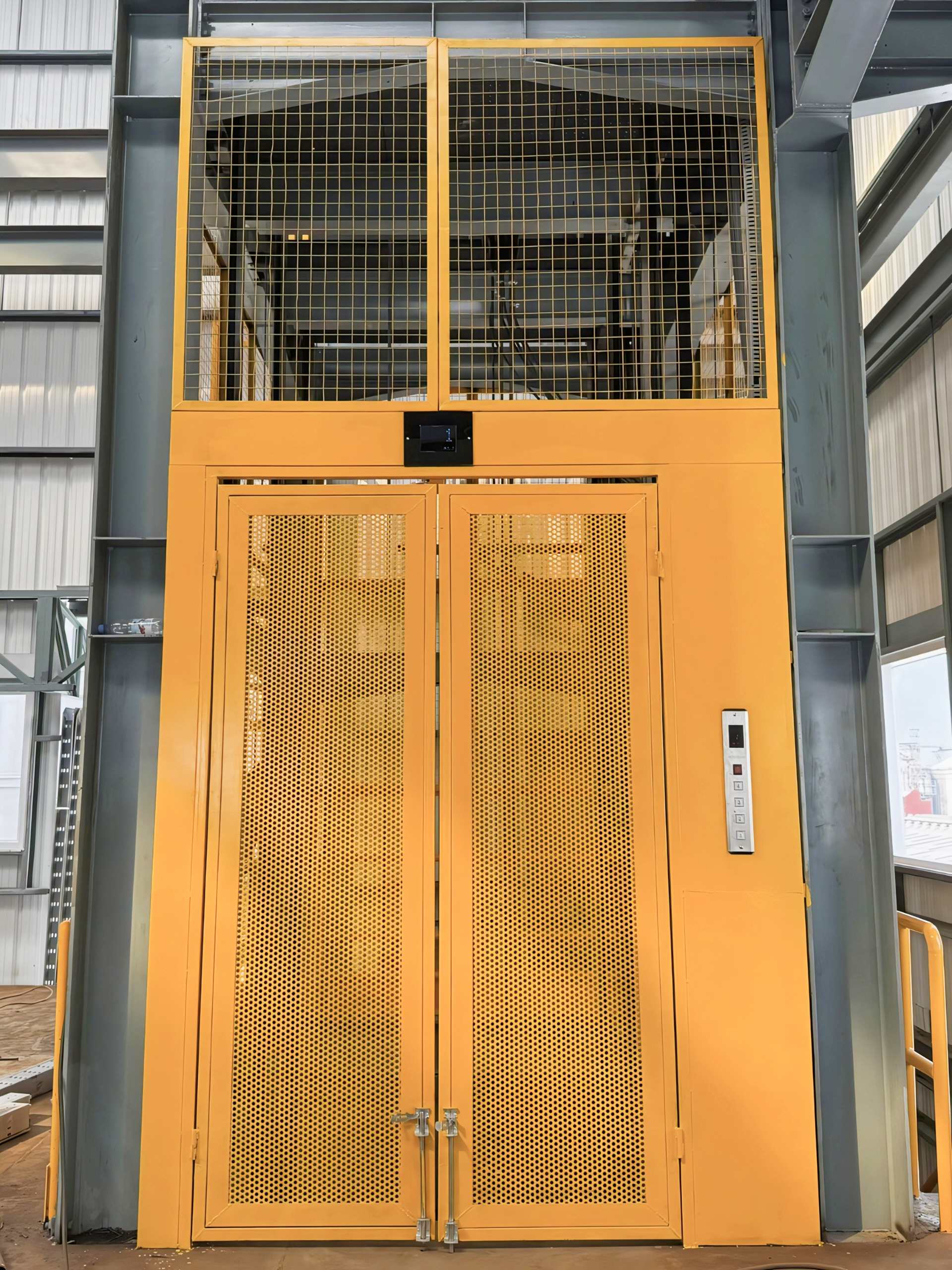
A freight lift is a heavy-duty industrial elevator featuring a reinforced enclosed car, dedicated traction or drive machinery, multi-layer mechanical and electrical safety devices, and landing doors specified for the project—including engineering evaluation of whether an attendant may accompany loads under the applicable statutory safety regime.
Loading Classification, Car Reinforcement, and Material Handling Methods
Industrial lift structural loads depend not only on total static payload during travel, but also on impact forces and wheel-point concentrations during loading and unloading. Manual loading with hand pallet jacks imposes very different sill and floor stresses compared with powered forklifts driving onto the platform.
Consequently, specifying a heavy-duty freight lift requires sizing the car sling, anti-slip floor plate thickness, guide rails, and sill supports for eccentric loading forces, alongside protective bumper rails along the interior cabin walls.
Separating Permanent Building Installations from Temporary Construction Hoists
Industrial buyers should also separate permanent cargo or freight lift installations inside factories, warehouses, and shop-houses from temporary construction-site hoist rentals. Permanent systems integrate with either a self-supporting structural steel shaft or concrete hoistway walls, fitted with mechanical-electrical landing door interlocks at every stop.
Under Indonesian occupational safety law, determining whether an installation falls under Elevator and Escalator K3 rules (Permenaker No. 6/2017) or Lifting and Conveying Equipment K3 rules (Permenaker No. 8/2020) follows the equipment's technical design, permitted occupancy, and review by authorized labour inspectors.
Site Survey Checklist and Pre-Consultation Inputs
To streamline initial engineering review, record available floor-opening or shaft dimensions, ground-floor pit depth, top-floor overhead clearance, number of stops and floor-to-floor heights, door entry arrangement (single-side or through-car), and maximum pallet dimensions and gross weight.
PT Indocrane Wahana Solusindo's engineering team in Surabaya reviews layout constraints, self-supporting shaft options for existing buildings, custom fabrication, and site installation under an agreed project scope.
Technical references
Need a technical discussion?
Send your initial requirement so Indocrane can help map the right solution for you.