Why Manual Logbooks Often Miss Early Equipment Stress Signals
Across many industrial plants and multi-storey buildings, crane and lift maintenance schedules rely strictly on uniform calendar intervals, treating lightly used auxiliary equipment identically to heavily cycled bottleneck units.
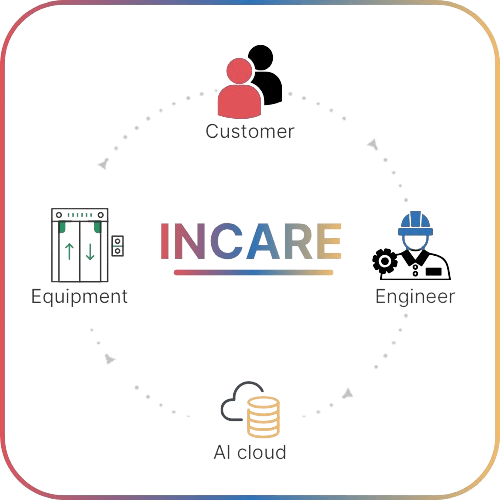
When drive fault trips, overload events, and brake or door-cycle counts go unrecorded, maintenance teams often learn of developing issues only after an unplanned shutdown. PT Indocrane Wahana Solusindo developed the INCARE monitoring approach to close this visibility gap through structured equipment-status capture and performance review.
Operational Parameters That Deliver the Highest Maintenance Value
Effective industrial monitoring does not overwhelm plant staff with noisy metrics. The most actionable baseline records for maintenance engineers are cumulative motor run hours, hoist or elevator start-stop cycle counts, timestamped PLC and inverter fault/alarm logs, overload-trigger events, and categorized downtime history.
By reviewing alarm trends—such as recurring overcurrent warnings on a specific motion or repeated landing-door interlock faults on one floor—technicians focus physical inspections directly on the affected subsystem before secondary damage occurs.
Compatibility Review for New Equipment and Existing Control-Panel Retrofits
INCARE monitoring is not restricted to newly fabricated cranes or lifts. On existing assets, engineers first assess the installed control panel: available PLC or VFD communication ports, non-intrusive status relay and sensor tap points that preserve hardwired safety circuits, enclosure space, and site connectivity constraints.
Where legacy panels rely on worn contactor logic with minimal diagnostic feedback, combining control/inverter modernization with monitoring readiness often establishes a cleaner, safer electrical baseline.
Monitoring Boundaries: Decision Support, Never a Substitute for Physical Inspection
Digital monitoring dashboards and performance reports complement—but never replace—hands-on mechanical inspections or statutory K3 examinations by authorized inspectors. Wire-rope wear, structural weld integrity, oil seals, and physical brake-lining thickness still require direct measurement by competent personnel.
Actual monitoring insights depend on installed instrumentation, calibration discipline, and facility operating patterns. Contact Indocrane's engineering team to review a practical INCARE monitoring scope tailored to your crane and lift fleet.
Technical references
Need a technical discussion?
Send your initial requirement so Indocrane can help map the right solution for you.